The Architecture of a Well-Run Home


There is a quiet misconception at the highest levels of wealth:
That access to talent guarantees excellence.
It does not.
Behind many extraordinary homes—architecturally flawless, impeccably located, and infinitely resourced—there exists a subtle but persistent friction. Schedules misalign. Standards drift. Turnover becomes cyclical. The home functions, but it does not flow.
Not because of a lack of talent.
But because of a lack of design.
And this is why most of our first time clients, become repeat clients. We restructure functionality by building teams.
The Invisible Breakdown
Ultra-high-net-worth households are often built with the precision of a company, yet staffed as though they are not one. Staffing becomes a personal decision for most clients, and starts lacking structure.
Roles are blurred. Expectations are implied rather than defined. Exceptional individuals are brought in—but without the structure required for them to succeed.
Over time, this creates a quiet pattern:
High-caliber hires underperform
Responsibilities overlap or fall through
The principal becomes the default decision-maker
The household becomes operationally heavy
The issue is rarely who was hired.
It is how the environment was built.
Where Sophisticated Homes Go Wrong


Role Compression
The most common misstep is expecting one individual to operate across multiple disciplines.
An “assistant” becomes:
Executive support
Household operations
Staff management
Personal logistics
Family coordination
In well-run environments, these functions are distinct. When combined, even the most capable professionals will eventually fail—not from lack of ability, but from structural impossibility.
Absence of a Control Center
Every high-functioning household has a point of command.
Without it, the home becomes fragmented:
Communication is inconsistent
Standards vary by person
Accountability dissolves
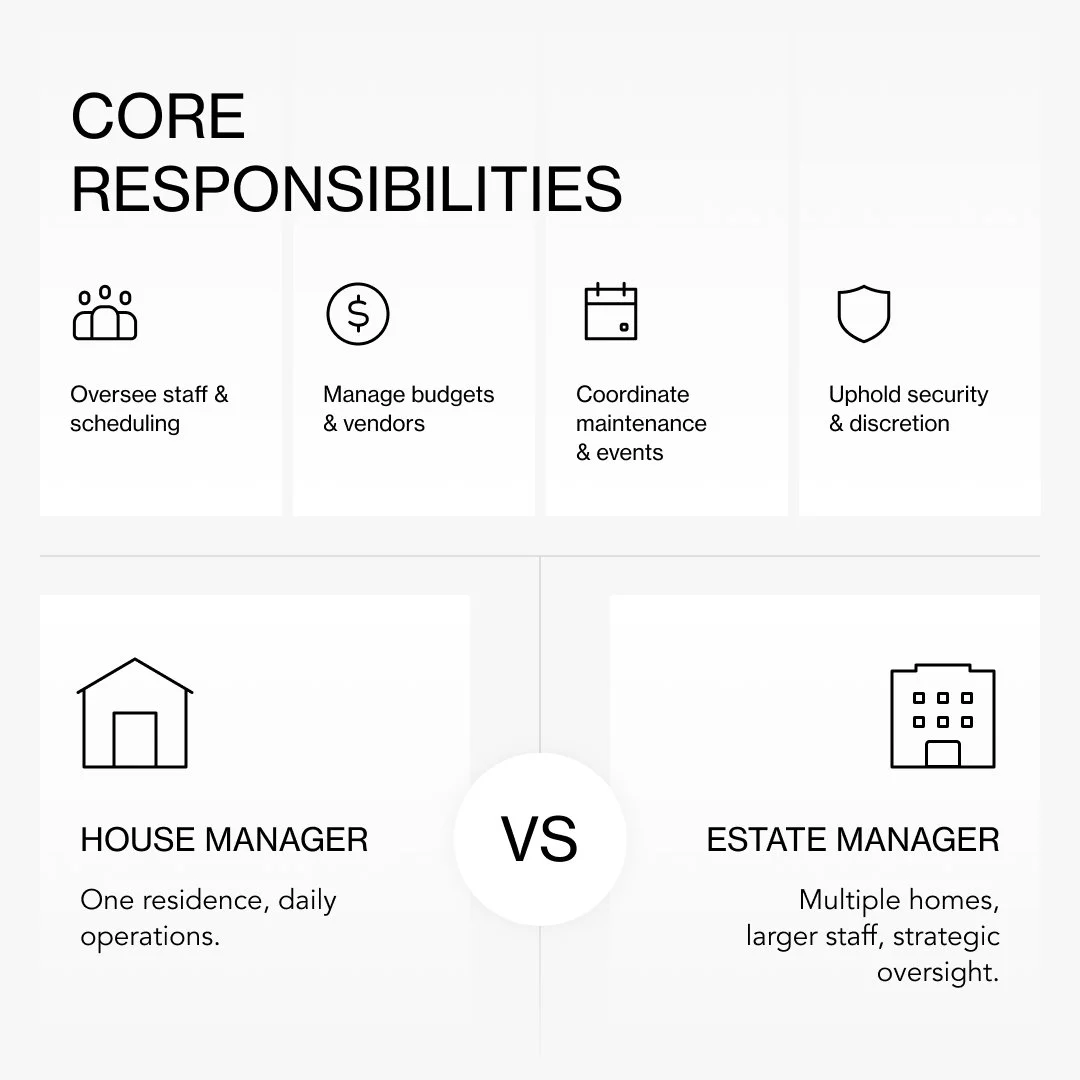
A residence of this caliber requires leadership—whether in the form of a House Manager, Estate Manager, or Chief of Staff—to unify operations.
Undefined Standards
Discretion is expected. Excellence is assumed.
But rarely articulated.
Without clearly defined expectations, even experienced staff are left to interpret the level of service required. This leads to inconsistency—never quite wrong, but never truly exceptional.
The Difference You Can Feel
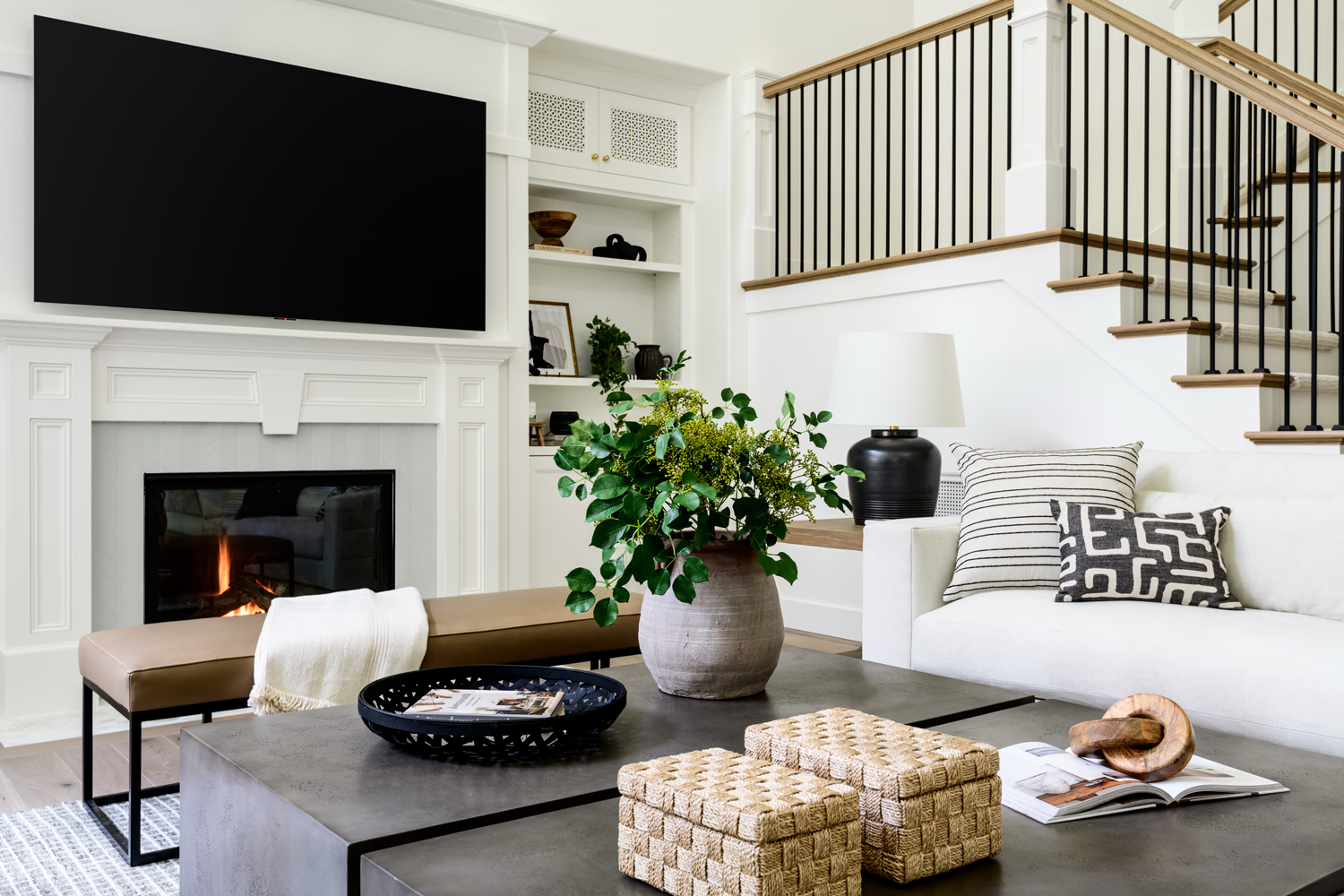
In a well-structured home, particularly one that has been restructured by Serafina Staffing, the difference is immediate—and unmistakable.
One client recalled his recent restructure with our a team saying it was, “indeed noticeable, like a breath of fresh winter air.”
Everything moves with quiet precision.
Staff anticipate rather than react.
Standards are upheld without instruction.
The principal is removed from operations entirely.
The home does not require management.
It runs.
The Shift
The question is not:
“Who should we hire?”
It is:
“How should this household operate?”
When that answer is clear:
Hiring becomes precise
Retention becomes natural
The environment becomes self-sustaining
Without it, even the best talent will rotate through.
A Final Note


At a certain level, staffing is no longer a transactional process.
It is a matter of alignment—between people, expectations, and environment.
At Serafina Staffing, we approach staffing as architecture: designed with intention, built with precision, and refined for longevity.
Top Talent, Delivered. Matchmaking at its Finest.